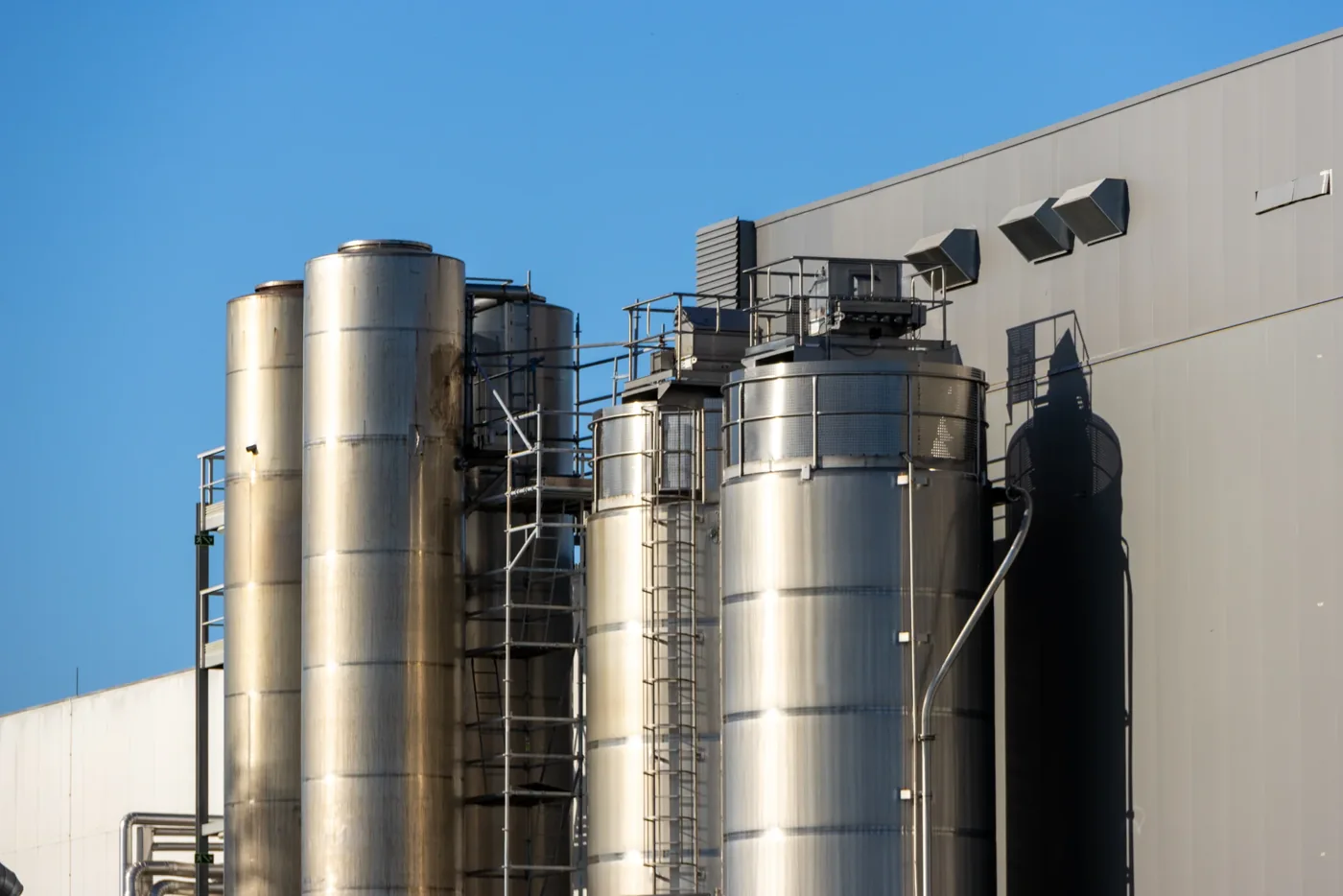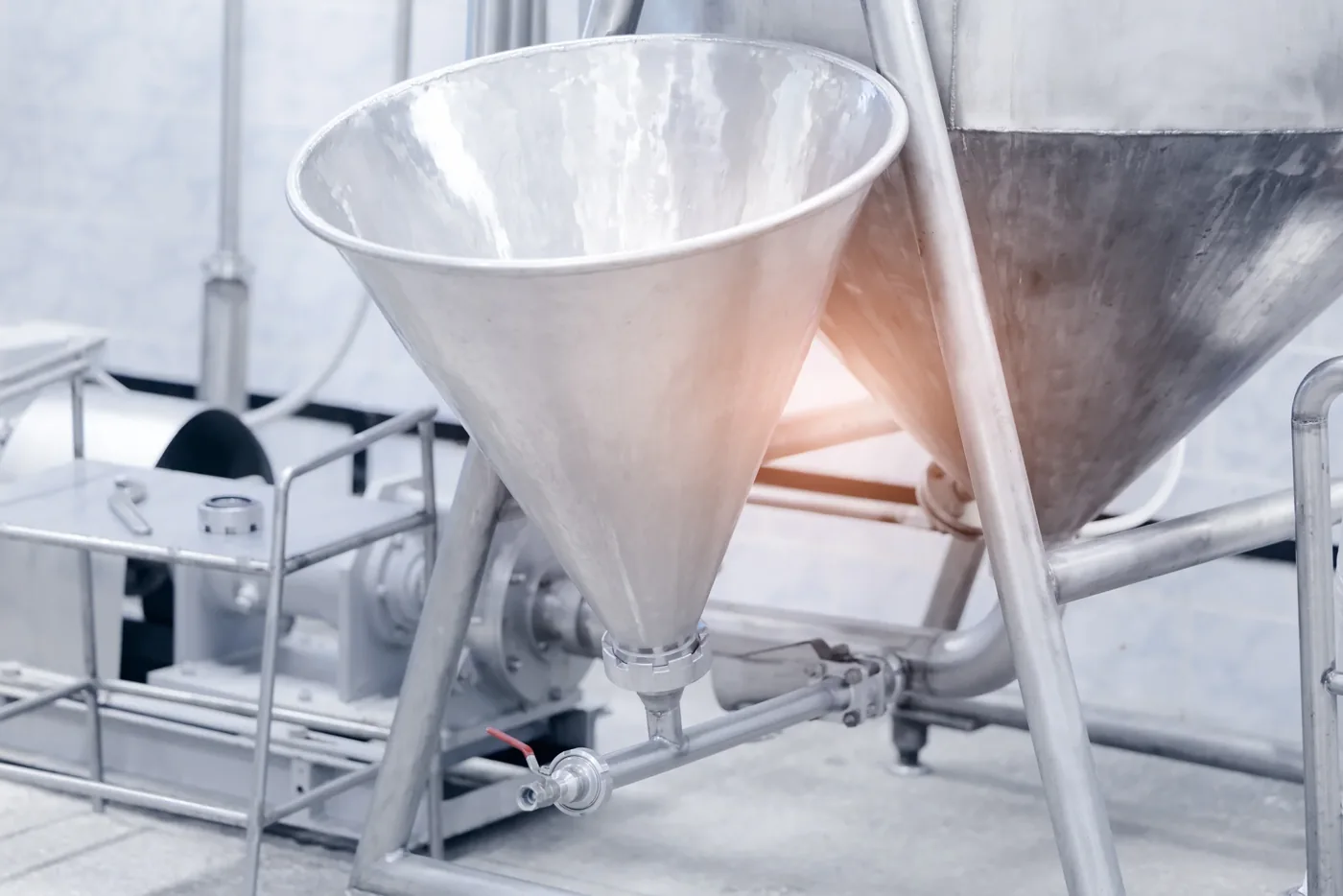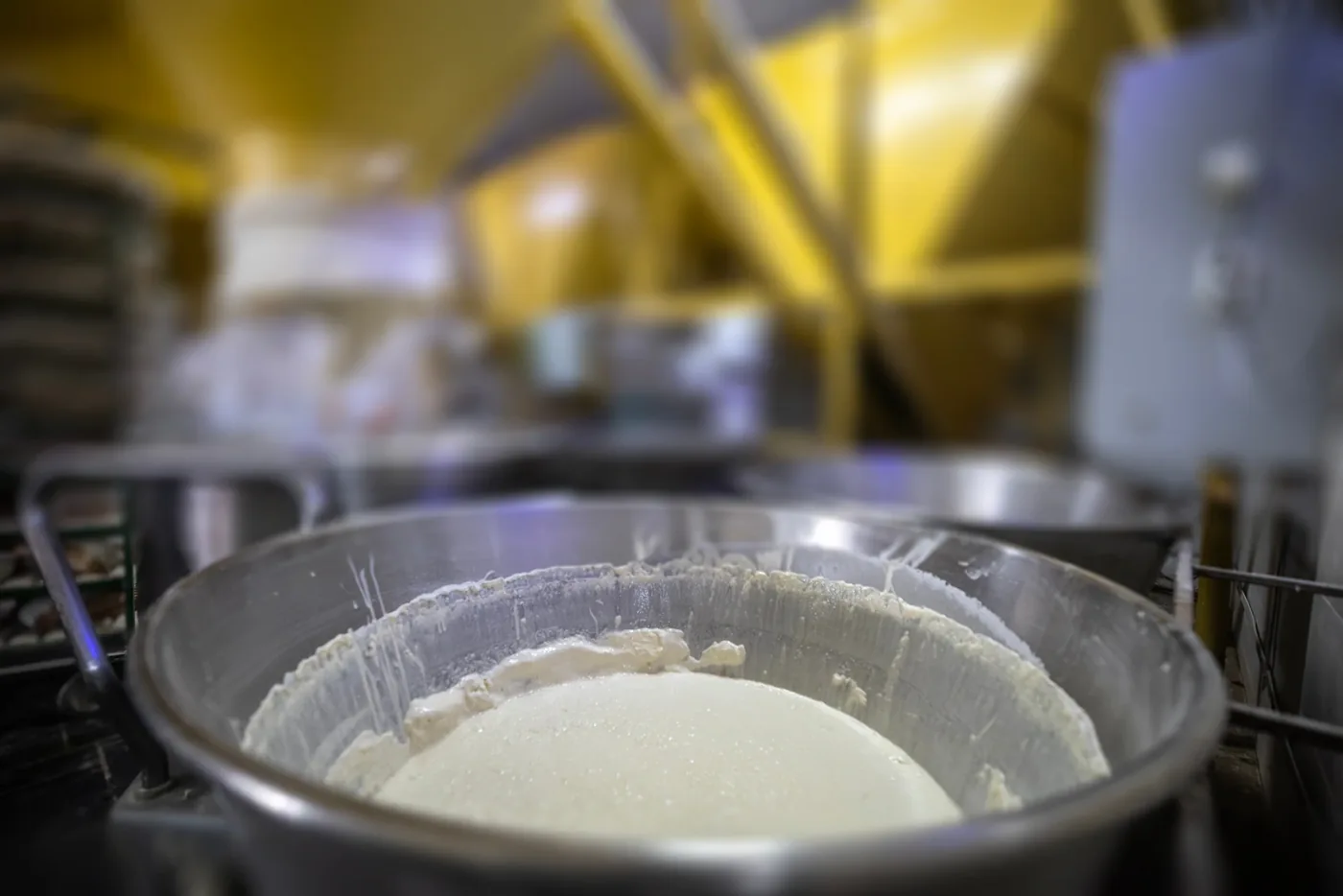
Cleaning a flour silo can temporarily increase airborne dust because removing settled residue disturbs fine particles that were previously resting on internal surfaces. Even while the visible deposit becomes smaller, some of that material may be suspended in the air before it is collected. That change matters because airborne flour dust presents different hazards from flour remaining undisturbed on a surface.
Settled flour and suspended flour behave differently
Flour residues may collect on walls, internal fittings, ledges and areas outside the normal movement of ingredients. While these deposits remain settled, their immediate behaviour is different from a cloud of flour particles dispersed in air.
Disturbance can change that condition rapidly. Material released from an internal surface may fall into the collection area, become airborne or settle somewhere else within the vessel.
The distinction is particularly important for combustible dust. The Health and Safety Executive’s guidance on food industry dust explosions identifies flour among the materials capable of producing an explosible dust atmosphere. A suitable concentration of airborne combustible dust and an effective ignition source can create an explosion hazard.
Removing a layer of flour is therefore not the same as immediately removing all the associated airborne dust risk. In addition to fire and explosion hazards, airborne flour dust can affect workers’ respiratory health. The HSE’s guidance on flour dust and occupational asthma explains why preventing dust clouds and controlling exposure are important during dusty work.
What happens when residue is disturbed?
Cleaning changes the physical location of the material. The outcome depends on the condition of the residue, how it is disturbed and how released particles are captured.
Three distinct movements may occur:
- Release: Previously attached flour separates from an internal surface.
- Suspension: Fine particles disperse into the surrounding air rather than falling directly into collection equipment.
- Redistribution: Some particles settle again on other surfaces or travel towards ventilation and extraction interfaces.
These movements can overlap. A reduction in visible residue does not necessarily mean airborne dust concentration is falling at that moment.
This also explains why the apparent speed of deposit removal is a poor measure of whether the overall cleaning approach is suitable.
The role of dust extraction and collection
Effective dust control considers what happens to the flour after it leaves the original surface. Collection arrangements must account for the particles released during cleaning, not simply the volume of settled material being removed.
Extraction performance, filtration, containment and the interfaces between the vessel and collection equipment are relevant parts of that assessment. Existing process extraction should not automatically be assumed suitable for every cleaning activity.
HSE guidance specifically discourages cleaning practices that unnecessarily disperse combustible food dust, including routine sweeping and compressed-air cleaning of dusty areas. It also addresses appropriate vacuum arrangements and extraction for powdered-food operations.
Equipment suitability must be assessed for the actual dust atmosphere and installation. A general-purpose cleaning appliance should not be assumed appropriate simply because it can collect visible powder.
Why the cleaning method has to match the vessel
Flour condition varies between installations. Fine loose powder, compacted residue and material adhering to internal features may respond differently when disturbed.
The vessel geometry also influences where released particles can travel. Narrow transitions, connected conveying equipment and internal structures may complicate collection even where the main wall surfaces appear straightforward.
Before selecting an approach to flour silo cleaning, the assessment should consider the residue, potential dust suspension, available collection arrangements and the site’s existing explosion-risk controls.
For a food factory, cleaning may also need to fit around ingredient handling and the requirement to prevent old material entering subsequent production. The wider handling context is explained under food grade silo cleaning.
Assess the airborne condition as well as the surfaces
A successful removal plan needs to address both where the flour starts and where it can go during the work. A visually cleaner silo may still contain suspended particles or deposits awaiting collection.
The relevant question is not simply how much flour can be detached. It is how the work will remove the intended residue while controlling dust release and preventing unnecessary redistribution within the storage system.