

Our food grade silo cleaning service removes retained ingredients from storage vessels and the agreed outlet connections. Food manufacturers need cleaning that suits the ingredient and the next production run. We work to the site’s hygiene procedure, paying attention to old material in seams and recesses as well as the main internal surfaces.
Food Grade Silo Cleaning
Our food grade silo cleaning service removes retained ingredients from storage vessels and the agreed outlet connections.
HomeFood Grade Silo CleaningFood Grade Silo Cleaning enquiry

Product contact surfaces
The cleaning work needs to identify product-contact surfaces and any areas that cannot be reached.
Production requirements
The site's hygiene procedures and intended next product inform the agreed cleaning and release checks.
Ingredient carry-over and allergen control
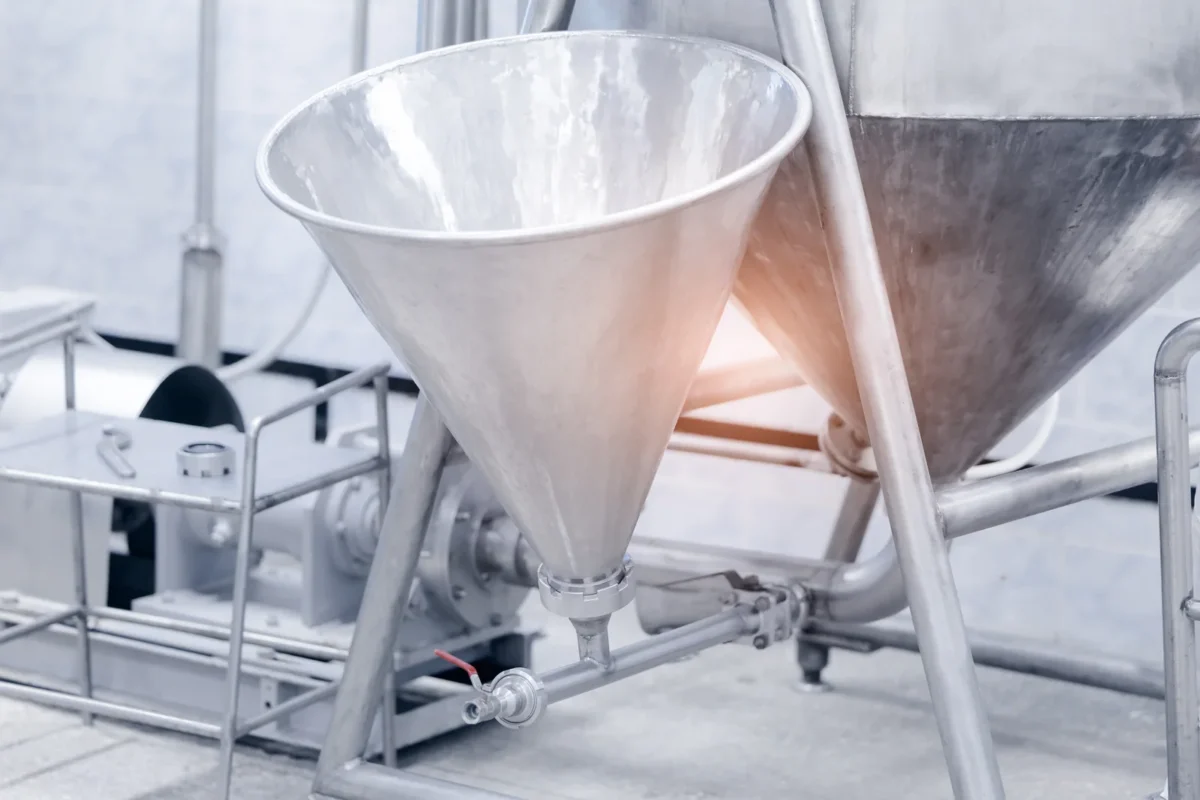
A silo can look empty while flour or other powder remains around a level probe, a bolted seam or the discharge cone. Those pockets matter during an ingredient change. Visible cleanliness does not establish that an allergen has been removed, so any sampling and acceptance criteria belong in the changeover plan. Dry cleaning is useful for suitable powders; wet cleaning requires compatible surfaces, controlled liquid recovery and adequate drying before refill.
Discuss food grade silo cleaning
Complete the form and we will get back to you.
Preparing for production
We keep cleaning and product release distinct. The site’s quality team decides whether the completed work meets its food-safety procedure, including any agreed tests. If we find moisture damage or pest evidence, we explain where it occurred so the clean can be considered alongside the wider hygiene controls. Changing the cleaning frequency alone may not resolve recurring contamination.
Shared transfer or handling equipment can retain a previous ingredient outside the vessel. Its cleaning status needs to be clear before the site releases the silo for the next production run.
Food Grade Silo Cleaning: common questions
Does food-grade cleaning mean allergen-free?
No. Allergen control needs a defined cleaning procedure and suitable verification. A visual clean alone cannot establish that every allergen has been removed.
Can water be used inside an ingredient silo?
Only where it suits the product, construction and cleaning procedure, with controlled drying before refill. Dry cleaning may be more appropriate.
Is pest treatment included in cleaning?
Cleaning removes residues and can expose pest activity. Any insecticide treatment or fumigation needs a separate assessment and authorisation.
Who decides when a food silo can be refilled?
The site's quality team releases the silo under its hygiene procedure. Cleaning provides evidence of the work completed; any allergen or microbiological checks must meet the agreed acceptance criteria.
Are seams and outlet fittings included?
We identify the accessible retention points in the cleaning plan. Connected transfer lines are included only where agreed, so their cleaning status remains clear.