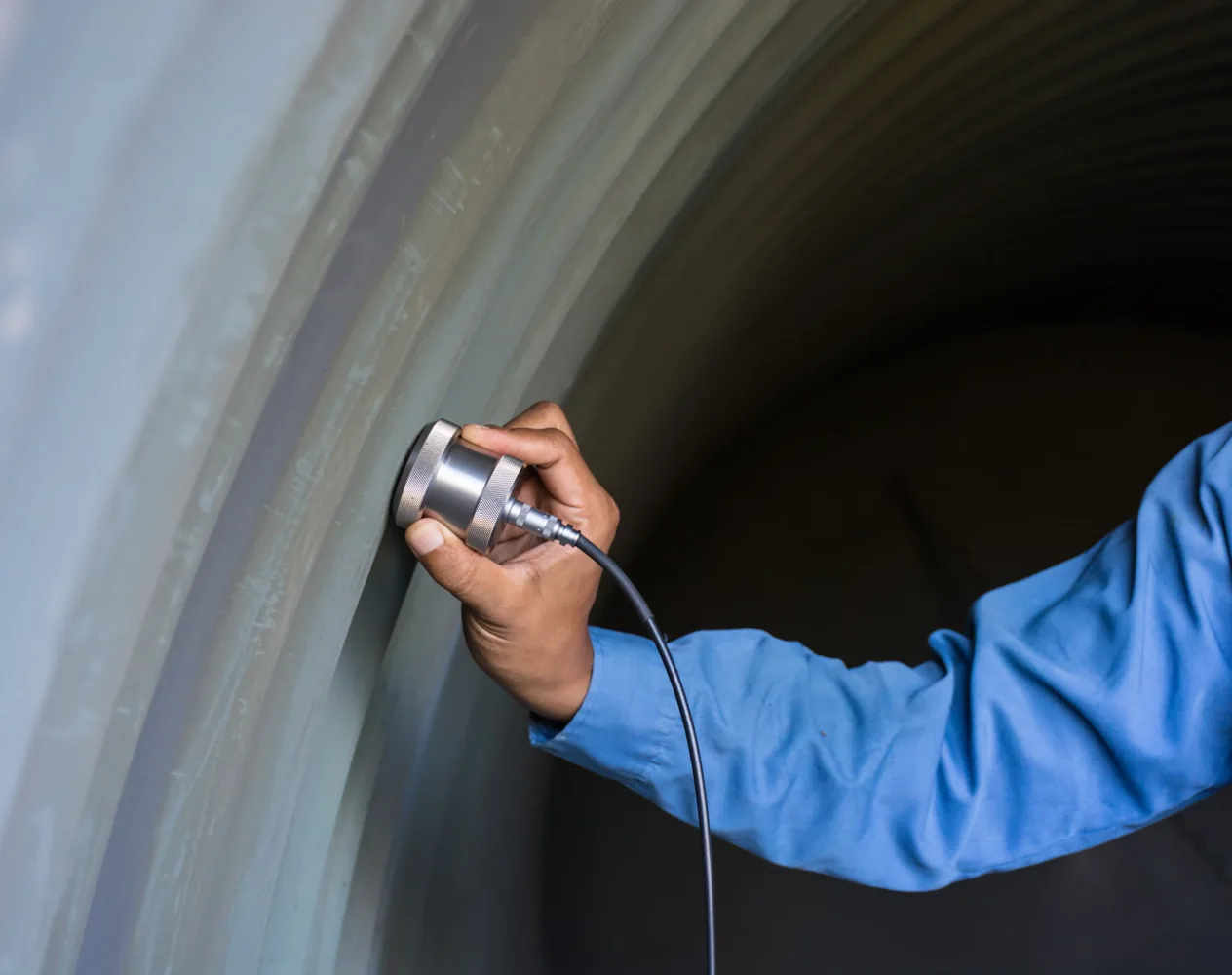
Cleaning can expose a silo defect because accumulated product, dust and hardened deposits may conceal the surface underneath. Once that material has been removed, corrosion, damaged liners, cracks or deteriorated joints may become visible. However, observing a defect is not the same as determining its cause, extent or effect on the silo’s structural integrity.
For maintenance engineers arranging a shutdown, that distinction determines how cleaning, examination and any subsequent testing should be organised.
What deposits can conceal
Material retained against silo walls can obstruct the areas where deterioration first becomes apparent. A deposit may also conceal the boundary between sound material and a visibly damaged section.
Common locations worth considering when defining the inspection area include:
- Internal wall surfaces: Adhered powder or product can hide visible corrosion and surface damage.
- Discharge transitions: Material around the outlet can conceal worn surfaces, damaged linings or deteriorated connections.
- Joints and seams: Deposits can make the condition of accessible connections difficult to assess.
- Internal fittings: Residues may obscure fixings, supports and exposed components.
The extent of deposit masking depends on the stored product and how the vessel operates. Fine powder may coat large areas, while cohesive material may build up in isolated sections.
In either situation, removing residue provides a clearer opportunity to observe the underlying condition. It does not establish that all concealed deterioration has been discovered.
What a cleaner can observe after deposits are removed
Cleaning personnel may notice visible corrosion, unusual surface markings, damaged coatings, displaced fittings or other conditions that warrant attention. These observations can help the maintenance team identify locations for closer examination.
For example, a patch of visible corrosion may become apparent once a compacted deposit has been removed. Its location and approximate visible extent can be recorded, but appearance alone cannot establish how much wall thickness remains.
Similarly, a line resembling a crack may require assessment to determine whether it affects a coating, a liner, a welded connection or the underlying structural material.
Recording the observation is useful. Assigning an engineering diagnosis without sufficient examination is not.
Why structural assessment is a separate activity
A structural assessment considers questions that cleaning itself cannot answer: whether the observed condition affects load-bearing capacity, whether deterioration extends beyond the visible surface and whether continued operation is appropriate.
The engineering specialist may need to review drawings, material specifications, previous inspection findings, loading conditions and the particular defect. Additional measurements or testing can then be selected according to the issue being investigated.
For some vessels, the relevant question concerns remaining metal thickness. Elsewhere, it may concern a connection, liner, support or local deformation. A single inspection technique is not necessarily suitable for every problem.
This is why silo testing should remain a distinct consideration rather than being presented as an automatic result of cleaning.
Arrange cleaning around the inspection requirement
The most useful sequence starts with the information the inspecting engineer actually needs. Cleaning an entire vessel when only particular surfaces require examination may be unnecessary. Conversely, cleaning too limited an area can leave important locations obscured.
A coordinated programme should establish:
- Which internal surfaces and fittings require examination.
- What stored material and retained deposits need removing.
- Which areas must remain accessible for subsequent inspection or testing.
- How visible observations and unresolved access limitations will be recorded.
- Who has responsibility for engineering findings and subsequent operational decisions.
Access arrangements also need to reflect the vessel’s hazards. The HSE’s guidance on confined spaces explains why confined-space work must be assessed and why entry should be avoided wherever reasonably practicable. Appropriate remote examination may reduce the need for internal access.
Keep the condition report and diagnosis distinct
A cleaning completion record can identify the areas treated and any visible abnormalities observed. An engineering report should separately interpret relevant findings, specify further examination where needed and address the consequences for maintenance or continued use.
The distinction prevents a simple description such as visible corrosion from being mistaken for a measured assessment of remaining strength.
Where deposits obstruct the surfaces needed by an engineer, silo inspection preparation can make those areas available for examination. The resulting visibility supports diagnosis but does not substitute for it.