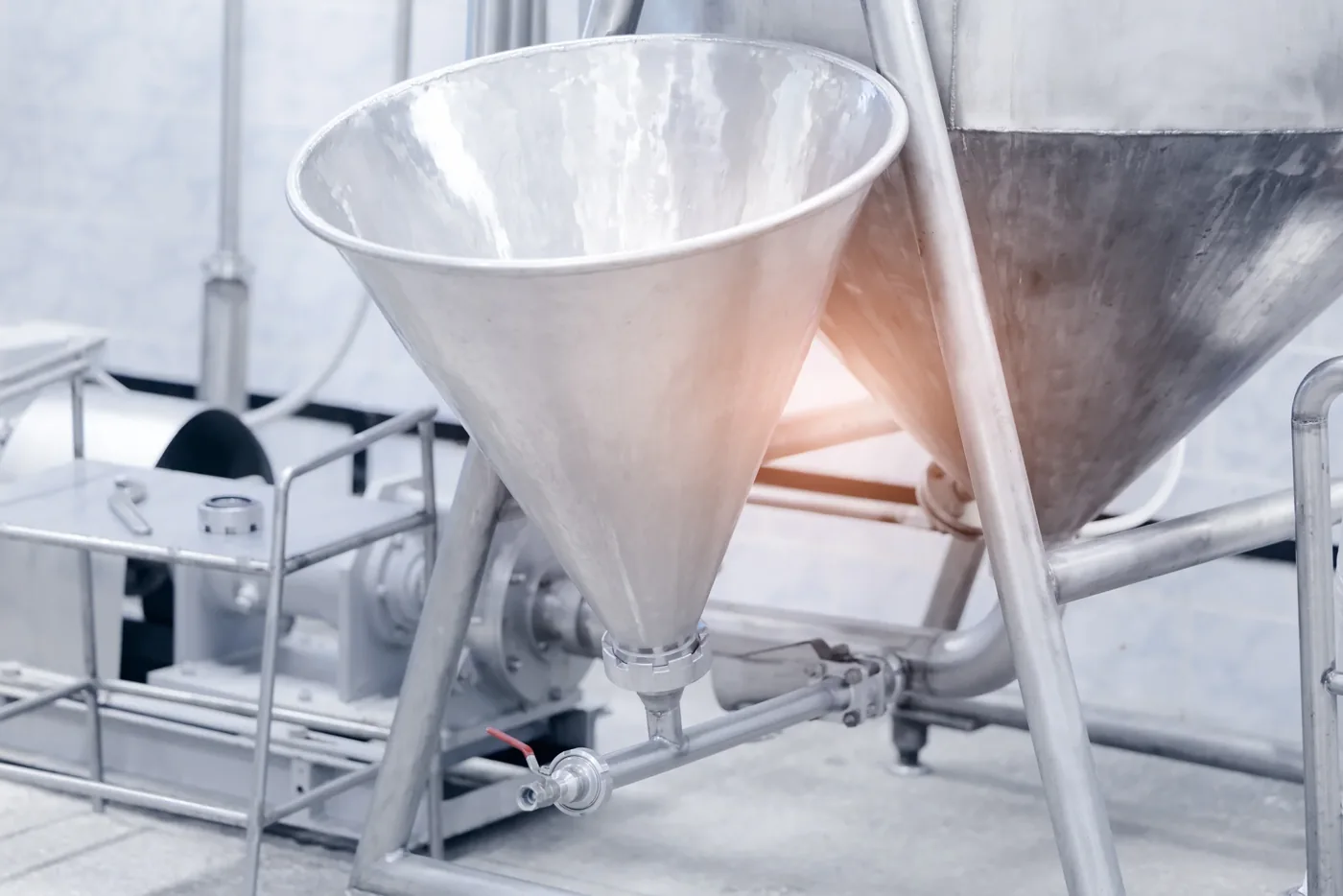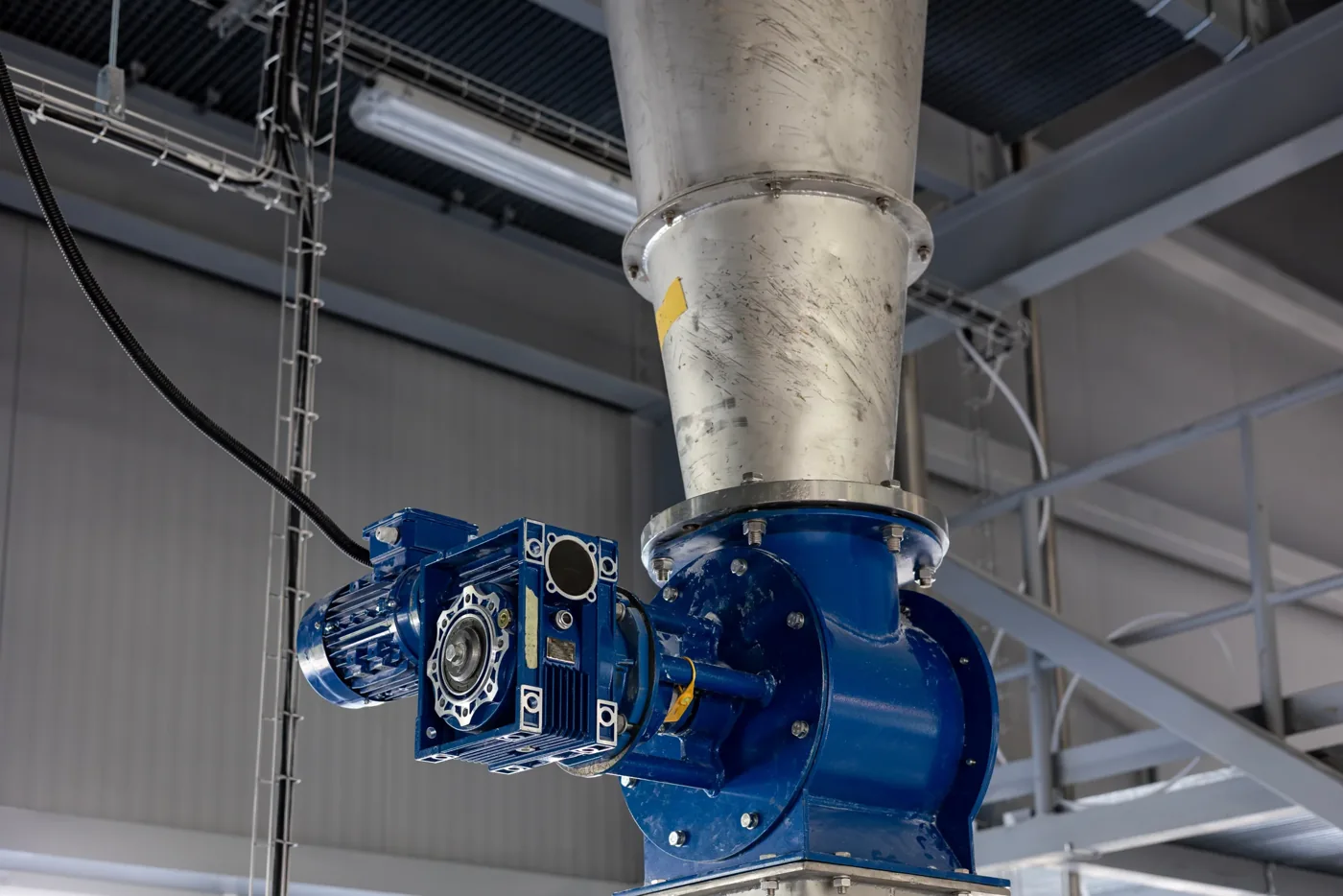
A silo can appear empty because product has stopped leaving through its normal discharge route, even though substantial material remains inside. Bulk solids do not always flow uniformly across the full vessel. Some may be retained against walls, in corners, around equipment or above a discharge opening. A low level indication cannot confirm that every internal surface and discharge pocket is clear.
Why normal outloading can leave product behind
Silo discharge depends on how material moves towards the outlet. Vessel shape, product characteristics and the arrangement of discharge equipment all influence that movement.
When material moves mainly through a central region, material nearer the walls may remain comparatively stationary. These inactive areas are often described as dead zones.
Other storage arrangements may leave smaller quantities distributed across floors, sloping sections or around internal fittings. Flat-bottom vessels can retain product beyond the reach of their normal reclaim equipment, while hopper-shaped arrangements may hold material around transitions or areas where flow is interrupted.
Neither design guarantees that every internal surface is cleared by ordinary discharge.
The practical distinction is between the product that has followed the designed outloading route and the product that still occupies the vessel afterwards.
What does an empty reading actually mean?
Level indication is useful for managing deliveries and production, but it measures or infers a particular condition using a particular instrument.
A point-level device may show that product is absent at its sensing location. A continuous measurement system may estimate the distance to a material surface. Neither necessarily describes every pocket, wall deposit or concealed region of the silo.
For example, a sensor detecting a low central surface may coexist with retained material further towards the vessel perimeter. A low reading can also be consistent with material that is present but no longer moving towards the outlet.
The accuracy of an indicated quantity depends on the measuring method, calibration assumptions, vessel dimensions and actual distribution of the contents.
For this reason, a displayed empty condition should be interpreted as operational information rather than confirmation that the vessel is physically free of product.
Where can residual stock remain?
The most relevant locations depend on the design and the product stored. Possible areas include:
- Wall-adjacent regions: Material outside the principal discharge flow can remain after central movement has ended.
- Flat floors and corners: Ordinary reclaim equipment may not reach every part of the storage footprint.
- Outlet transitions: Deposits can remain around narrowing sections and discharge connections.
- Internal fittings: Supports, liners and other features may provide locations for product to accumulate.
- Above a restricted outlet: Material may be retained even though little or nothing is being delivered downstream.
The difference between a flat-bottom silo and a hopper silo is particularly relevant when identifying which regions normal outloading can reach. Floor reclaim equipment and sloping discharge sections leave different opportunities for residual material to remain.
Why retained product matters operationally
Residual stock complicates inventory reconciliation. The recorded quantity received minus the quantity dispatched may differ from what the instrumentation suggests remains in storage.
Retained material can also reduce space available for the next delivery, affect product-change planning or obstruct areas that need maintenance access. Where old product remains, it may also have to be considered before introducing a different grade or fresh batch.
Not every residual deposit is a discharge blockage. A vessel may continue operating while carrying a persistent accumulation that is discovered only during a planned emptying or inspection.
When ordinary discharge is no longer enough
Silo emptying is relevant when remaining contents need to be removed beyond what the normal outloading arrangement can achieve. The purpose may be inventory recovery, preparation for maintenance, product change or access to internal areas.
The proposed work depends on how much material remains, where it is retained and whether it can move unexpectedly. The HSE’s guidance on agricultural confined spaces identifies grain silos and bins as hazardous enclosed environments and emphasises avoiding entry where possible.
For production planning, the decisive question is whether the next activity requires the silo merely to have stopped discharging or to be cleared of residual product. Those are different conditions, and only the latter makes remaining material an explicit part of the work.