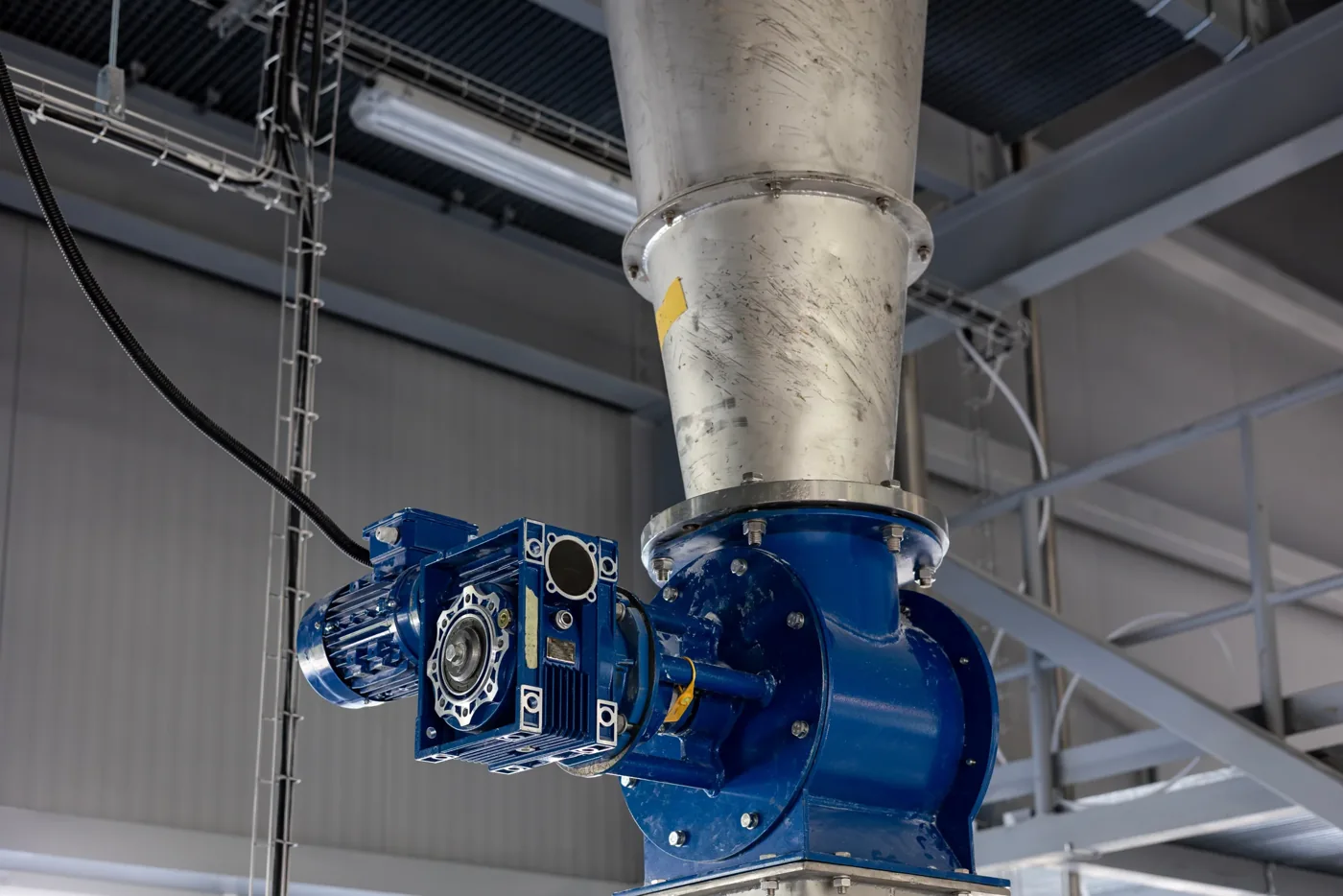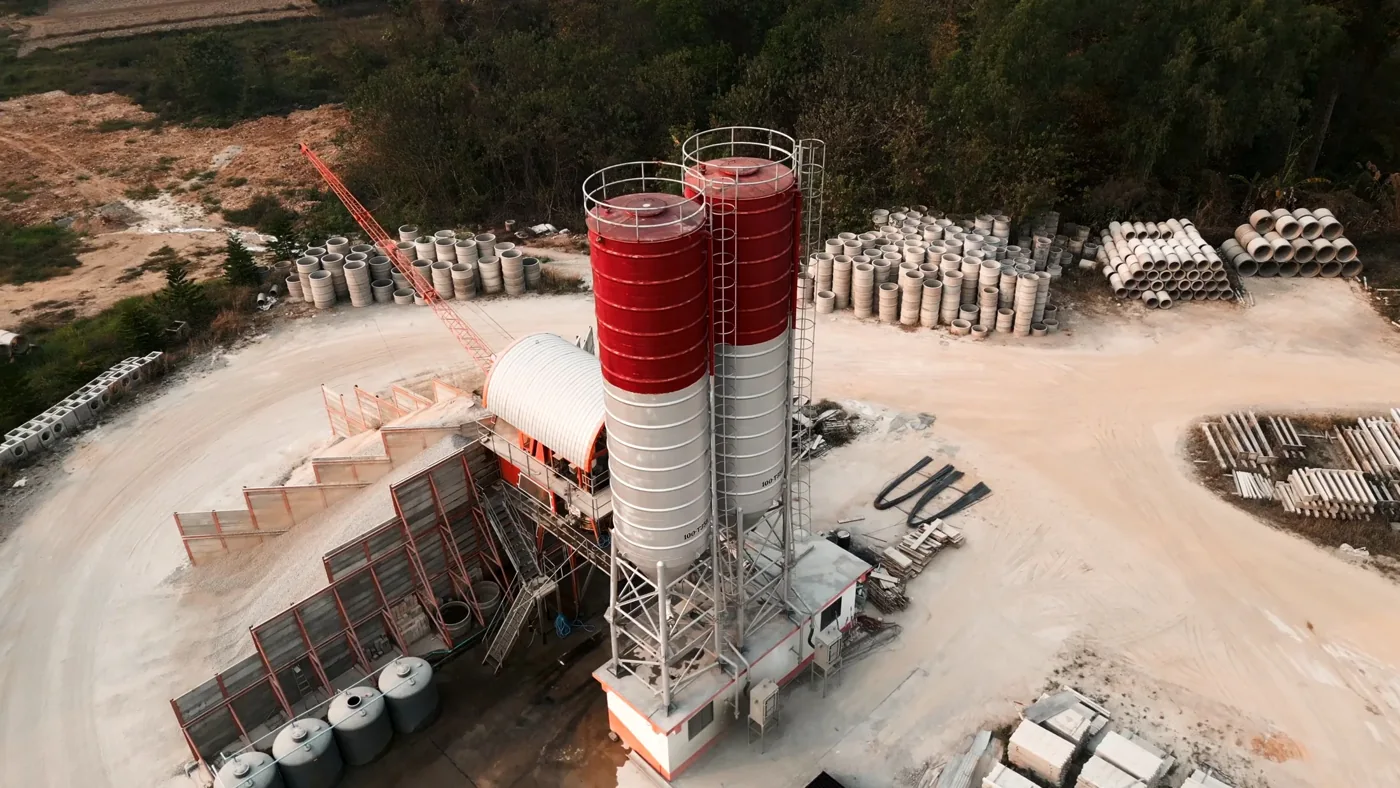
Cement can build up inside a silo because not every part of each delivery necessarily follows the normal discharge path. Fine powder may remain against walls, around fittings or in regions with limited movement. Repeated deliveries can add fresh material around older residue, while moisture exposure can contribute to deposits becoming hard and difficult to remove.
The result may develop gradually. A silo can continue supplying a batching plant while its internal deposits increase and its usable storage capacity falls.
How repeated deliveries contribute to accumulation
Cement delivered pneumatically enters the storage system as a moving powder. Once inside, the distribution and subsequent discharge of that material depend on the silo geometry, filling arrangement and flow characteristics.
Normal discharge does not mean every particle moves at the same rate. Material that remains around internal features or outside the main flow region can be present through several filling and emptying cycles.
Each new delivery may conceal the older layer rather than remove it. This is particularly relevant when operators assess the vessel mainly by the amount delivered and the amount transferred into production.
The difference between total internal volume and space genuinely available for fresh cement can therefore increase without an obvious single blockage event.
Why some deposits become hard
Two related processes need separating: ordinary powder consolidation and moisture-related hardening.
Compaction and consolidation
Powder retained under load can become more densely packed over time. Repeated filling, settlement and pressure from overlying material may make previously loose residue increasingly resistant to movement.
Compacted cement is not necessarily chemically hardened. Its appearance and resistance to removal do not, on their own, establish whether water has been involved.
Moisture ingress and cement caking
Cement is a hydraulic binder. Contact with sufficient moisture can initiate hydration reactions, causing particles to bind and ultimately form harder deposits. The Nuclear Decommissioning Authority’s technical report explains the setting and hardening mechanism for ordinary Portland cement.
Potential exposure pathways include defective seals, weather-related ingress, condensation and moisture introduced with material or conveying air. These are possibilities to investigate rather than conclusions that can be drawn from the presence of a deposit alone.
Where cement caking repeatedly occurs in the same location, the pattern may provide a useful indication of where further investigation should concentrate. It does not establish which component or operating condition is responsible.
What deposit patterns can reveal
Different deposit locations have different practical consequences:
- Wall deposits: Reduce the effective internal dimensions and can narrow the space through which material moves.
- Outlet accumulation: Can interfere with the intended movement of cement towards the feeder or discharge connection.
- Deposits around internal fittings: May obstruct access to components or conceal areas that require inspection.
- Uneven residual layers: Can make assumptions about available storage capacity unreliable.
These observations are useful for planning, but photographs or external indicators cannot reliably determine the hardness, thickness or full extent of every internal deposit.
Cleaning and finding the underlying cause are different tasks
Cement silo cleaning addresses retained powder and hardened deposits that ordinary discharge leaves behind. Removing this material can recover occupied space and expose surfaces for further assessment.
It does not automatically explain why the material accumulated. Where the same deposits return, a separate examination of sealing, delivery conditions, material movement and operating history may be necessary.
Dust management also matters when deposits are disturbed. The HSE’s mineral dust guidance emphasises effective extraction, maintenance and cleaning methods that avoid unnecessary airborne dust. Although written for quarrying, those dust-control principles are relevant to assessing cement residue work.
For a batching plant, the useful distinction is between restoring internal space and correcting a recurring condition. Cleaning can address the accumulated material; understanding what caused it requires evidence about the vessel and its operation before deposits formed again.